Manufacturing ERP systems are no longer just fancy software—they’re the backbone of modern production. From real-time inventory tracking to seamless supply chain coordination, these platforms are revolutionizing how factories operate. Let’s dive into what makes them indispensable.
What Are Manufacturing ERP Systems?

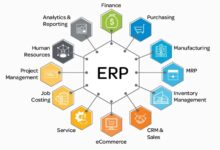
Enterprise Resource Planning (ERP) systems tailored for manufacturing integrate core business processes into a unified platform. Unlike generic ERP solutions, manufacturing-specific systems are built to handle complex production workflows, material planning, quality control, and shop floor execution.

Core Definition and Purpose
Manufacturing ERP systems centralize data from procurement, production, inventory, sales, and finance. Their primary goal is to eliminate data silos and provide real-time visibility across the entire operation. This enables manufacturers to respond faster to market changes, reduce waste, and improve delivery accuracy.
- Integrates departments like production, finance, HR, and logistics.
- Provides a single source of truth for all operational data.
- Supports both discrete and process manufacturing models.
Evolution from Traditional to Modern ERP
Early ERP systems were on-premise, monolithic, and expensive to maintain. Today’s manufacturing ERP systems are often cloud-based, modular, and scalable. Advances in AI, IoT, and machine learning have enabled predictive analytics and automated decision-making.
- 1990s: On-premise systems with limited integration.
- 2000s: Introduction of web-based modules and better supply chain tools.
- 2020s: Cloud ERP with AI-driven insights and mobile access.
“Modern manufacturing ERP systems are not just about efficiency—they’re about agility and resilience in a volatile global market.” — Gartner Research, 2023
Key Features of Manufacturing ERP Systems
The best manufacturing ERP systems go beyond basic accounting and inventory. They offer specialized tools that address the unique challenges of production environments. These features ensure that every part of the manufacturing lifecycle is optimized.
Production Planning and Scheduling
This feature allows manufacturers to create detailed production schedules based on demand forecasts, material availability, and machine capacity. Advanced systems use finite capacity scheduling to prevent overloading work centers.
- Generates work orders and routing instructions.
- Tracks machine and labor utilization in real time.
- Integrates with MRP (Material Requirements Planning) for seamless execution.
Inventory and Warehouse Management
Effective inventory control is critical in manufacturing. ERP systems track raw materials, work-in-progress (WIP), and finished goods across multiple locations. Barcode scanning and RFID integration enhance accuracy.
- Automates stock replenishment using min/max levels.
- Supports FIFO, LIFO, and batch tracking for compliance.
- Reduces carrying costs and prevents stockouts.
Quality Management and Compliance
Manufacturers in regulated industries (like aerospace or pharmaceuticals) must adhere to strict quality standards. ERP systems include tools for quality inspections, non-conformance tracking, and audit trails.
- Enforces SOPs (Standard Operating Procedures) on the shop floor.
- Generates compliance reports for ISO, FDA, or AS9100.
- Integrates with lab testing and calibration systems.
Top 7 Manufacturing ERP Systems in 2024
Choosing the right ERP can make or break a manufacturing operation. Below are seven of the most powerful and widely adopted manufacturing ERP systems, each offering unique strengths for different types of manufacturers.
1. SAP S/4HANA Manufacturing
SAP S/4HANA is a leader in enterprise ERP, especially for large-scale manufacturers. Its real-time data processing engine allows for instant decision-making across global operations.
- Best for: Large multinational manufacturers.
- Key strength: Advanced analytics and AI-powered forecasting.
- Integration: Works seamlessly with SAP Ariba and SAP IBP.
Learn more at SAP’s official site.
2. Oracle NetSuite Manufacturing Edition
NetSuite offers a cloud-based ERP ideal for mid-sized manufacturers. It combines financials, CRM, and supply chain management in one platform.
- Best for: Growing mid-market manufacturers.
- Key strength: Real-time dashboards and financial consolidation.
- Flexibility: Highly customizable with SuiteScript and SuiteFlow.
Explore features at NetSuite Manufacturing.
3. Microsoft Dynamics 365 for Finance and Operations
This ERP integrates deeply with Microsoft’s ecosystem, making it ideal for companies already using Office 365 and Azure. It supports both discrete and process manufacturing.
- Best for: Microsoft-centric organizations.
- Key strength: AI-driven insights and Power BI integration.
- Deployment: Available on-premise or in the cloud.
4. Infor CloudSuite Industrial (SyteLine)
Tailored for complex discrete manufacturers, Infor CloudSuite offers robust shop floor control and project-based manufacturing capabilities.
- Best for: Job shops and engineer-to-order (ETO) manufacturers.
- Key strength: Deep shop floor integration and serial tracking.
- Industry focus: Heavy machinery, industrial equipment.
Visit Infor’s product page for details.
5. Epicor ERP
Epicor is a favorite among small to mid-sized manufacturers, especially in automotive and metal fabrication. It offers strong production scheduling and supply chain tools.
- Best for: SMBs with complex production needs.
- Key strength: Lean manufacturing support and shop floor mobility.
- Technology: Includes IoT and AI for predictive maintenance.
6. Plex Systems by Rockwell Automation
Plex is a cloud-native ERP built specifically for manufacturing. It’s known for its real-time production monitoring and quality control features.
- Best for: Process manufacturers (food & beverage, chemicals).
- Key strength: Real-time SPC (Statistical Process Control).
- Integration: Native link to Rockwell’s industrial automation systems.
Check out Plex Systems for more.
7. IQMS (now part of Dassault Systèmes as EQM)
IQMS offers a complete ERP/MES (Manufacturing Execution System) hybrid, making it ideal for manufacturers who need tight integration between planning and execution.
- Best for: High-mix, high-volume discrete manufacturers.
- Key strength: Fully integrated MES and ERP in one system.
- Visibility: Real-time production tracking and OEE monitoring.
Benefits of Implementing Manufacturing ERP Systems
Deploying a manufacturing ERP system is a strategic move that delivers measurable returns across the organization. The benefits extend far beyond automation—they reshape how manufacturers compete.
Improved Operational Efficiency
By automating repetitive tasks like order entry, inventory updates, and production reporting, ERP systems reduce manual errors and free up staff for higher-value work.
- Reduces data entry time by up to 70%.
- Streamlines workflows across departments.
- Enables faster order-to-cash cycles.
Enhanced Decision-Making with Real-Time Data
Manufacturing ERP systems provide live dashboards and KPIs that help managers make informed decisions. Whether it’s spotting a bottleneck or adjusting production schedules, real-time data is a game-changer.
- Tracks OEE (Overall Equipment Effectiveness) in real time.
- Offers predictive analytics for demand forecasting.
- Supports scenario planning and what-if analysis.
Cost Reduction and ROI
While ERP implementation requires investment, the long-term savings are substantial. Companies report ROI within 12–18 months due to reduced waste, lower inventory costs, and improved labor productivity.
- Reduces inventory carrying costs by 20–30%.
- Lowers scrap and rework rates through quality control.
- Improves on-time delivery, boosting customer satisfaction.
“Companies using integrated ERP systems see 25% higher profit margins on average.” — Aberdeen Group
Challenges in Adopting Manufacturing ERP Systems
Despite the benefits, ERP adoption is not without hurdles. Understanding these challenges helps organizations prepare for a smoother transition.
Implementation Complexity and Time
ERP projects can take 6–18 months, depending on the size and complexity. Data migration, system configuration, and user training require careful planning.
- Requires cross-functional project teams.
- Customizations can delay go-live dates.
- Phased rollouts reduce risk but extend timelines.
Data Migration and Integration Issues
Moving data from legacy systems often uncovers inconsistencies and duplicates. Integration with existing machinery (like CNC machines or PLCs) may require middleware.
- Data cleansing is a critical pre-implementation step.
- APIs and EDI connections are needed for supply chain partners.
- IoT integration adds complexity but improves visibility.
User Resistance and Change Management
Employees may resist new systems due to fear of job loss or unfamiliarity. Effective change management—including training and leadership buy-in—is essential.
- Involve end-users early in the selection process.
- Provide role-based training and ongoing support.
- Highlight personal benefits, like easier reporting and fewer errors.
How to Choose the Right Manufacturing ERP System
Selecting the right ERP isn’t just about features—it’s about fit. A system that works for a car manufacturer may not suit a custom furniture shop. Here’s how to make the right choice.
Assess Your Business Needs and Scale
Start by mapping your current processes and identifying pain points. Are you struggling with inventory accuracy? Production delays? Compliance issues?
- Define must-have vs. nice-to-have features.
- Consider future growth—will the system scale with you?
- Match the ERP to your manufacturing type: discrete, process, or hybrid.
Evaluate Deployment Options: Cloud vs. On-Premise
Cloud ERP offers faster deployment, lower upfront costs, and automatic updates. On-premise gives more control but requires IT infrastructure.
- Cloud: Ideal for companies wanting quick ROI and scalability.
- On-Premise: Preferred by organizations with strict data security requirements.
- Hybrid: Combines both, useful for global firms with regional compliance needs.
Vendor Support and Total Cost of Ownership
Look beyond the initial license fee. Consider training, customization, maintenance, and upgrade costs. Strong vendor support can make or break implementation success.
- Ask about SLAs (Service Level Agreements) and response times.
- Check user reviews on platforms like G2 or Capterra.
- Negotiate long-term contracts with clear exit clauses.
Future Trends in Manufacturing ERP Systems
The future of manufacturing ERP is intelligent, connected, and adaptive. Emerging technologies are pushing these systems beyond traditional boundaries.
AI and Machine Learning Integration
AI is transforming ERP from a reactive tool to a predictive one. Systems can now forecast demand, detect quality anomalies, and optimize production schedules autonomously.
- AI-driven MRP reduces overstocking and stockouts.
- Machine learning improves yield rates over time.
- Natural language processing enables voice-based shop floor commands.
IoT and Smart Factory Integration
ERP systems are increasingly connecting directly to machines on the shop floor. Sensors feed real-time data into the ERP, enabling live monitoring of equipment health and production output.
- Enables predictive maintenance, reducing downtime.
- Supports digital twin technology for simulation and testing.
- Integrates with SCADA and MES systems for end-to-end visibility.
Blockchain for Supply Chain Transparency
Blockchain is being explored to enhance traceability in complex supply chains. ERP systems can log every transaction—from raw material sourcing to final delivery—on an immutable ledger.
- Ensures authenticity in high-value or regulated goods.
- Reduces fraud and counterfeiting risks.
- Improves compliance with sustainability and ethical sourcing standards.
Case Studies: Success Stories with Manufacturing ERP Systems
Real-world examples demonstrate the transformative power of manufacturing ERP systems. Here are two compelling case studies.
Case Study 1: Automotive Parts Manufacturer
A mid-sized auto parts supplier in Michigan struggled with delayed deliveries and excess inventory. After implementing Epicor ERP, they achieved:
- 30% reduction in inventory carrying costs.
- 25% improvement in on-time delivery.
- Automated shop floor data collection via tablets.
The ERP’s production scheduling module eliminated manual spreadsheets, reducing planning time from 3 days to 4 hours.
Case Study 2: Food and Beverage Producer
A regional beverage company adopted Plex Systems to manage batch production and quality control. Results included:
- Real-time tracking of ingredients and expiration dates.
- 50% faster recall response due to full traceability.
- Integration with packaging lines reduced downtime by 20%.
The cloud-based system allowed remote monitoring during the pandemic, ensuring business continuity.
FAQs About Manufacturing ERP Systems
What is the difference between ERP and MRP?
MRP (Material Requirements Planning) focuses on inventory and production planning. ERP is broader, encompassing MRP plus finance, HR, sales, and supply chain management. Modern manufacturing ERP systems include advanced MRP as a core module.
How much does a manufacturing ERP system cost?
Costs vary widely. Cloud-based systems start at $1,000/month for small businesses, while enterprise solutions like SAP can cost millions. Total cost includes licensing, implementation, training, and maintenance.
Can ERP systems integrate with shop floor machines?
Yes, modern manufacturing ERP systems can integrate with CNC machines, PLCs, and sensors via APIs or middleware. This enables real-time data flow from the factory floor to the ERP database.
Is cloud ERP secure for manufacturing data?
Reputable cloud ERP providers use encryption, multi-factor authentication, and regular audits to ensure security. Many are more secure than on-premise systems, which rely on internal IT teams.
How long does ERP implementation take?
Typically 6 to 18 months. Small businesses may go live in 6–9 months, while large enterprises with complex processes can take over a year. Proper planning and change management shorten timelines.
Manufacturing ERP systems are no longer optional—they’re essential for staying competitive. From streamlining operations to enabling smart factory initiatives, these platforms empower manufacturers to innovate, scale, and thrive. The key is choosing the right system, preparing for change, and leveraging data for continuous improvement. The future of manufacturing is digital, and ERP is at its core.
manufacturing erp systems – Manufacturing erp systems menjadi aspek penting yang dibahas di sini.
Further Reading:
